Audit Season Reckoning: How Fragmented Cloud Environments Are Quietly Failing Federal Compliance Standards
Photo: Texas. Office of the State Auditor; Keel, John, Public domain, via Wikimedia Commons
For many enterprise compliance officers, the annual audit cycle has become a stress test that reveals something far more troubling than a few missing policy documents. It exposes the structural fault lines running through their cloud infrastructure — fault lines that accumulate quietly, tool by tool, integration by integration, until a federal auditor arrives and begins asking questions no one has clean answers to.
The irony is difficult to ignore. Organizations have spent the better part of the last decade migrating to cloud-based office environments precisely because the technology promised greater transparency, traceability, and control. Yet the reality for many enterprise teams is a patchwork of SaaS applications, loosely connected platforms, and ad hoc data flows that make compliance documentation feel less like a report and more like an archaeological dig.
The Architecture of Accidental Vulnerability
Compliance failures in cloud environments rarely originate from deliberate negligence. More often, they emerge from a series of individually reasonable decisions that collectively produce an incoherent system. A marketing team adopts a collaboration platform. Finance integrates a document management tool. HR deploys a cloud-based onboarding suite. Each procurement decision is justified on its own merits. But when a federal auditor asks where personally identifiable information lives, who accessed it, and whether it crossed a state or national boundary, the answer becomes an uncomfortable silence followed by a great deal of spreadsheet archaeology.
Data residency is among the most frequently overlooked vulnerabilities. Under frameworks such as HIPAA, certain categories of protected health information must remain within defined geographic boundaries. Under emerging state-level privacy statutes — and for organizations with federal contracts — the requirements grow more granular still. When cloud office tools are procured independently across departments, the likelihood that data is quietly replicating across regions without governance oversight is not theoretical. It is routine.
Access controls present a parallel challenge. A well-architected cloud environment maintains clear, auditable records of who holds access to what, when that access was granted, and when it was revoked. Fragmented environments frequently lack this coherence. Permissions are managed at the application level rather than the enterprise level, meaning that a departing employee's access to one system may be terminated promptly while residual credentials in three other platforms linger for months. Auditors examining access logs across such an environment will find inconsistencies that are difficult to explain and expensive to remediate retroactively.
What the Audit Trail Actually Reveals
SOC 2 compliance, which has become something of a baseline expectation for enterprises operating in data-sensitive industries, places particular emphasis on the integrity of audit trails. The framework requires that organizations demonstrate continuous, tamper-evident logging of system activity, administrative changes, and access events. When cloud tools operate in silos, each maintaining its own log format, retention schedule, and export capability, constructing a unified audit trail becomes an exercise in manual reconciliation — one that introduces exactly the kind of gaps and inconsistencies that auditors are trained to identify.
Consider a scenario that has played out across multiple enterprise environments: a regulatory inquiry into a data access event requires the organization to produce a chronological record of all interactions with a specific file or dataset. In a well-integrated cloud environment, this is a matter of querying a centralized logging system. In a fragmented one, it requires pulling logs from four separate platforms, normalizing timestamps across different time zones, and manually correlating user identifiers that differ between systems. The resulting document is not only labor-intensive to produce — it is inherently suspect, because the manual assembly process itself introduces opportunities for error.
Building a Compliance-First Cloud Architecture
The path forward does not require enterprises to abandon the cloud tools that drive productivity. It requires a governance framework that treats compliance as a design principle rather than an afterthought.
The first priority is establishing a unified data classification policy that applies consistently across all cloud platforms in the enterprise environment. Every tool that handles, stores, or transmits data should operate under the same definitional framework for what constitutes sensitive information, who is authorized to access it, and what logging requirements apply. This policy cannot live in a PDF on the intranet. It must be operationalized through technical controls and reflected in vendor contracts.
The second priority is centralizing identity and access management. Enterprises that route all cloud application access through a single identity provider — enforcing role-based permissions, multi-factor authentication, and automated deprovisioning — dramatically reduce the surface area for access control failures. When every application authenticates through the same system, the audit trail for access events becomes coherent and comprehensive rather than fragmented across vendor-specific logs.
The third priority is implementing a centralized logging and monitoring architecture that aggregates activity data from all cloud platforms into a single, queryable system. This is not a trivial technical undertaking, but it is the foundation upon which defensible audit documentation rests. Organizations that have made this investment consistently report that audit preparation time drops from weeks to days — and that the quality of the resulting documentation improves markedly.
Compliance Without Productivity Paralysis
A common objection to compliance-driven cloud governance is that it imposes friction on the teams whose productivity the cloud environment was designed to enhance. This concern is legitimate, but it conflates poorly designed compliance controls with well-designed ones.
The goal of a mature cloud governance framework is not to restrict what employees can do. It is to ensure that what they do is traceable, auditable, and consistent with the organization's regulatory obligations — without requiring them to think about compliance in the course of their daily work. When access controls are enforced at the infrastructure level, when data classification is automated, and when audit logging happens invisibly in the background, compliance becomes a structural property of the environment rather than a behavioral burden on its users.
Enterprises that have aligned their cloud office infrastructure with this model are not only better prepared for federal audits. They are also better positioned to respond to data incidents, demonstrate due diligence to enterprise clients, and scale their operations without accumulating regulatory liability at every step.
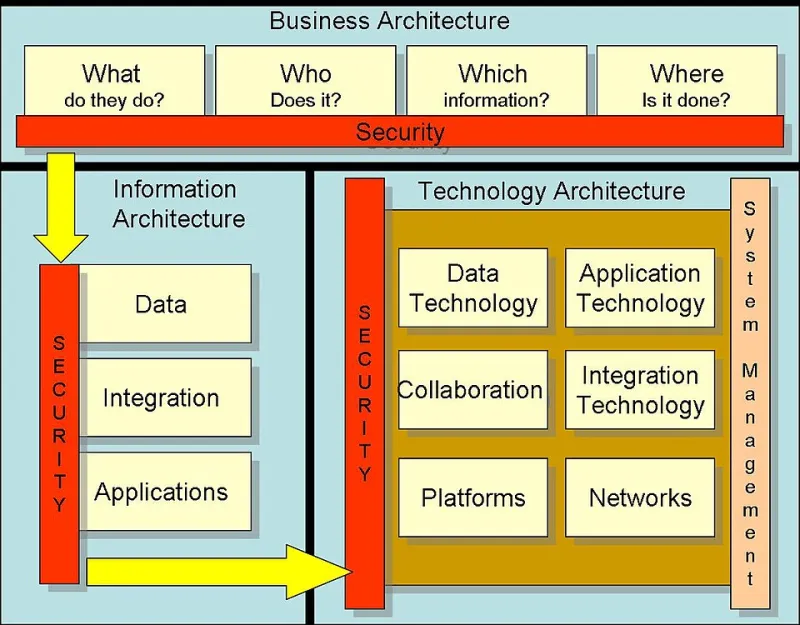
The compliance trap is real. But it is not inevitable. The organizations that escape it are those that stop treating cloud governance as a compliance department problem and start treating it as a foundational element of enterprise architecture.